We have been through basic economy's subtractions and the DOT rules that protect you. This one is smaller and more constant: the seat fee, which is probably the single most frequently paid avoidable charge in air travel, because the checkout flow is built to make paying it feel mandatory.
It usually is not.
The seat fee at checkout is the cost of choosing a seat the cost of choosing it now instead of at check-in, when it is usually free
The one distinction that decides everything: your fare
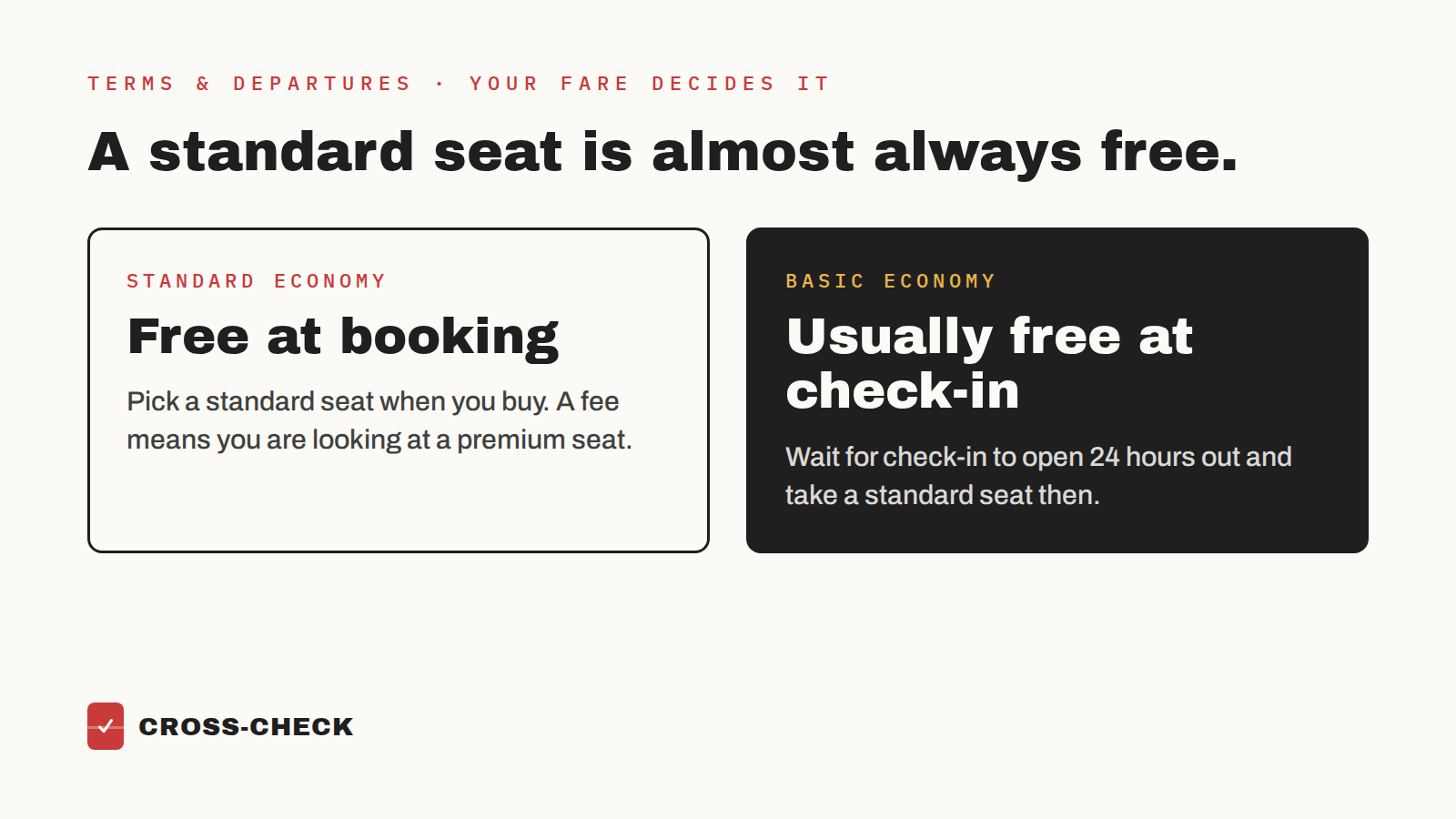
Seat fees concentrate almost entirely on basic economy. On a standard main-cabin fare, the answer is simpler than the checkout implies.
Standard economy: American, Delta, United and Alaska all let you pick a standard seat at booking for free. The good ones may already be gone, but a standard seat costs nothing to select in advance. If the checkout is quoting you a fee on a standard fare, it is quoting you a preferred or extra-legroom seat, not a standard one. Decline and pick a free standard seat instead.
Basic economy: this is where the fees live. American charges to pick a seat in advance on basic economy, and as of May 18, 2026 that applies even to elite members. United charges from about 15 dollars per flight for a basic-economy seat. Delta and JetBlue simply do not allow advance selection on their lowest fare, they assign at check-in.
The move on basic economy: wait
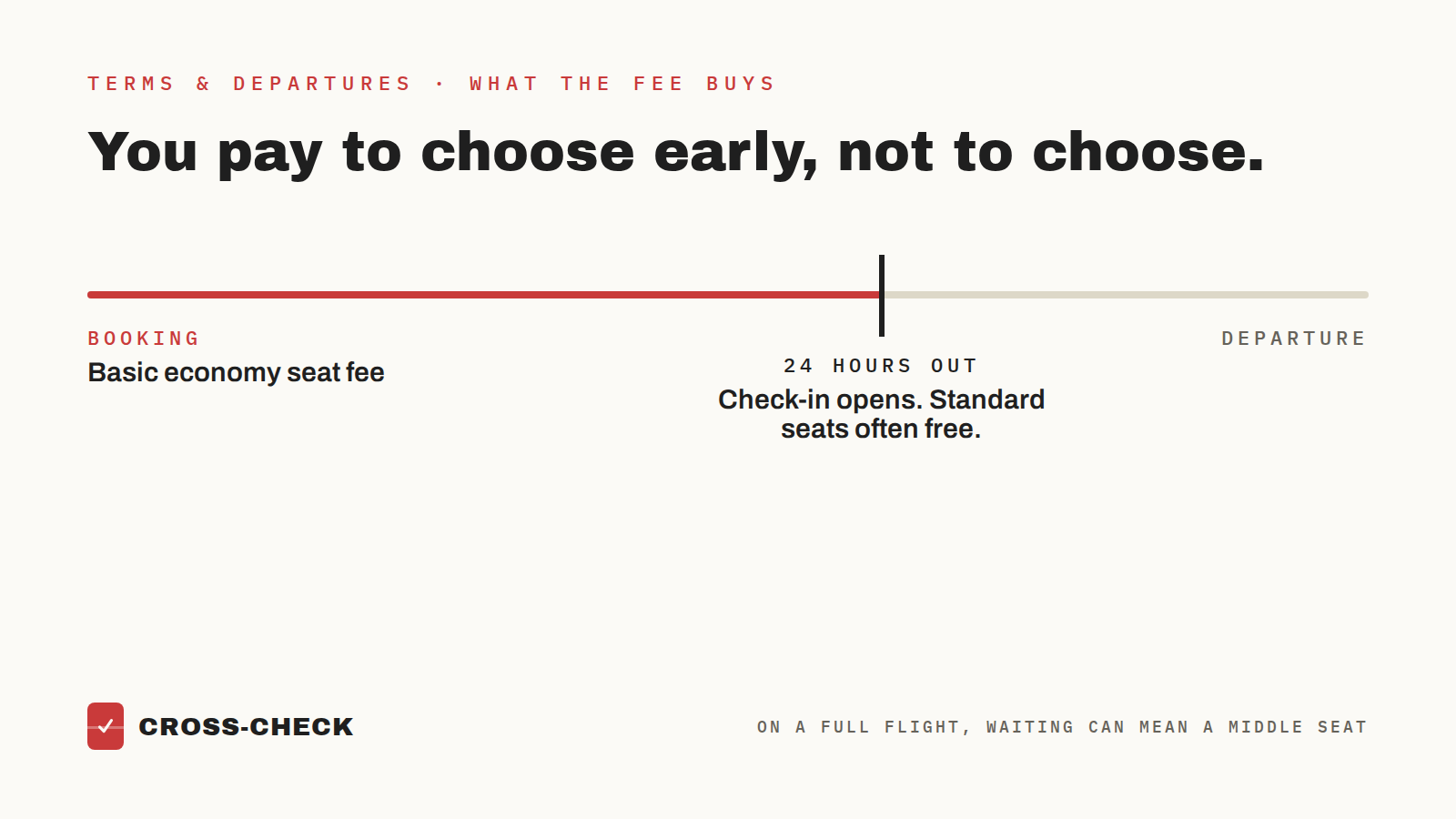
Here is the part the checkout page does not advertise. On most basic-economy fares you can select or change your seat for free during online check-in, starting 24 hours before departure, as long as standard seats remain. You give up choosing weeks out. You usually do not give up choosing at all.
So the basic-economy play is: check in the moment the window opens at 24 hours, and take the best standard seat still available. On a lightly booked flight that is often a perfectly good seat for zero dollars. The fee you skipped was a fee for choosing early, not a fee for choosing.
The risk is real and worth naming: on a full flight, waiting means middle seats or nothing good. If the flight looks packed and sitting in a specific spot matters, the fee buys certainty. That is the honest tradeoff, and it is a different decision than "the seat costs money."
What is actually worth paying for
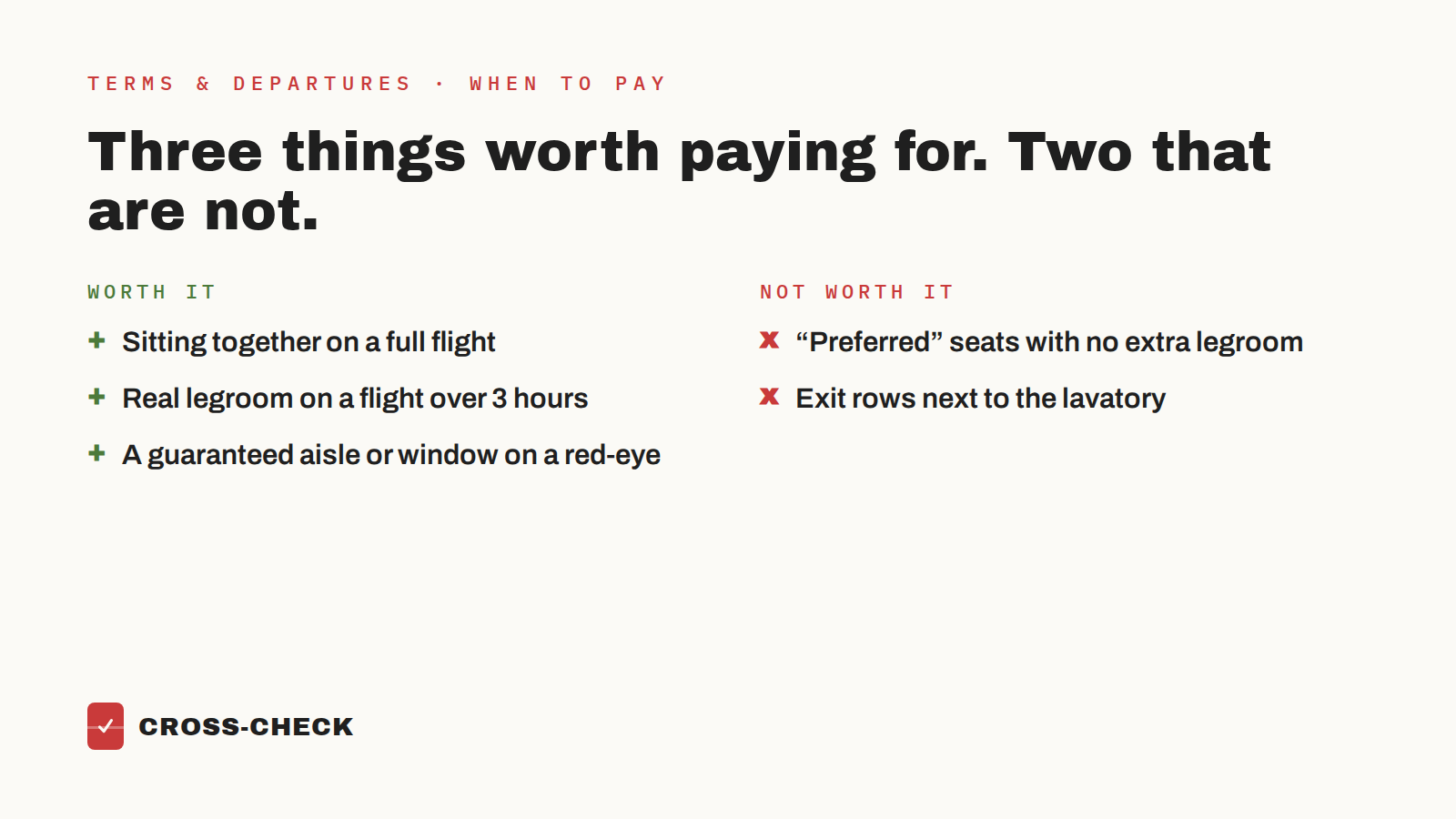
Three things, and only three.
Sitting with your travel companions, when the flight is full enough that check-in roulette would scatter you. Note the free option first: the DOT issued guidance in 2024 urging airlines to seat children under 13 with a parent at no charge, and most major carriers comply, though policies vary. If you are flying basic economy with kids, call the airline rather than paying.
Genuine extra legroom on a flight over about three hours if you are tall. Exit rows and extra-pitch sections offer 34 to 38 inches against a standard 29 to 31, which is a real difference on a long flight. The fee runs roughly 25 to 105 dollars one way.
A guaranteed aisle or window on a red-eye or long-haul where you know you need it to sleep or move.
What is not worth paying for
"Preferred" seats, which is the category the checkout pushes hardest. Airlines label seats near the front "preferred" even when they have no extra legroom. You are paying 10 to 35 dollars to deplane a few minutes earlier. Unless you have a genuinely tight connection, that is money for nothing.
And exit rows next to the lavatories, which are sold at the same premium as other exit rows but come with foot traffic, noise and smell. If you are paying for legroom, pay for a row that is not beside the toilets.
The refund most people miss
American, and most carriers on similar terms, refund your seat fee if the airline cancels or significantly delays your flight and cannot give you a comparable seat, if you upgrade, or if you cancel within the 24-hour window. If a schedule change costs you the seat you paid for, you are owed that fee back. Ask.
Bottom line: on a standard fare, a seat is free at booking, so never pay unless you are buying legroom or a guaranteed pair of seats. On basic economy, the seat is usually free at check-in, so wait unless the flight is full and togetherness matters. The fee is almost always a charge for doing early what you could do free a little later.
Related checks: what basic economy costs you now, lost luggage limits, and EU261 for American flyers.
How we checked this
Verified September 2026 against: carrier-by-carrier free-selection rules for standard fares via Autopilot's August 2026 seat-fee guide and FlightReservationsDesk; the free-at-check-in mechanic for basic economy via My Points Life's Southwest guide and Travel Points 101's Delta guide; American's May 18, 2026 elite basic-economy change and United's roughly 15 dollar basic-economy fee via Autopilot; preferred-versus-extra-legroom distinctions, exit-row-by-lavatory warning and the 34 to 38 inch pitch figures via GoBankingRates and FlightReservationsDesk; the DOT 2024 family-seating guidance via FlightReservationsDesk; and seat-fee refund conditions via NerdWallet's American Airlines analysis. Fees and rules vary by carrier, route and fare and change often; your fare rules at purchase govern.
No affiliate relationships. When that changes, you'll read it here first.