
Iceland sells the northern lights harder than almost anywhere. Tours run all season, from September to April, the photos are everywhere, and Reykjavik is a short flight from the US East Coast. So: is Iceland worth it for the northern lights?
We went to the data on the two things that decide whether you actually see them, the sun and the sky, and the answer depends almost entirely on whether the lights are the reason for the trip or a bonus on top of it.
Iceland: the place to go if you want to see the northern lights a great place to try, if you can live with a lot of cloud
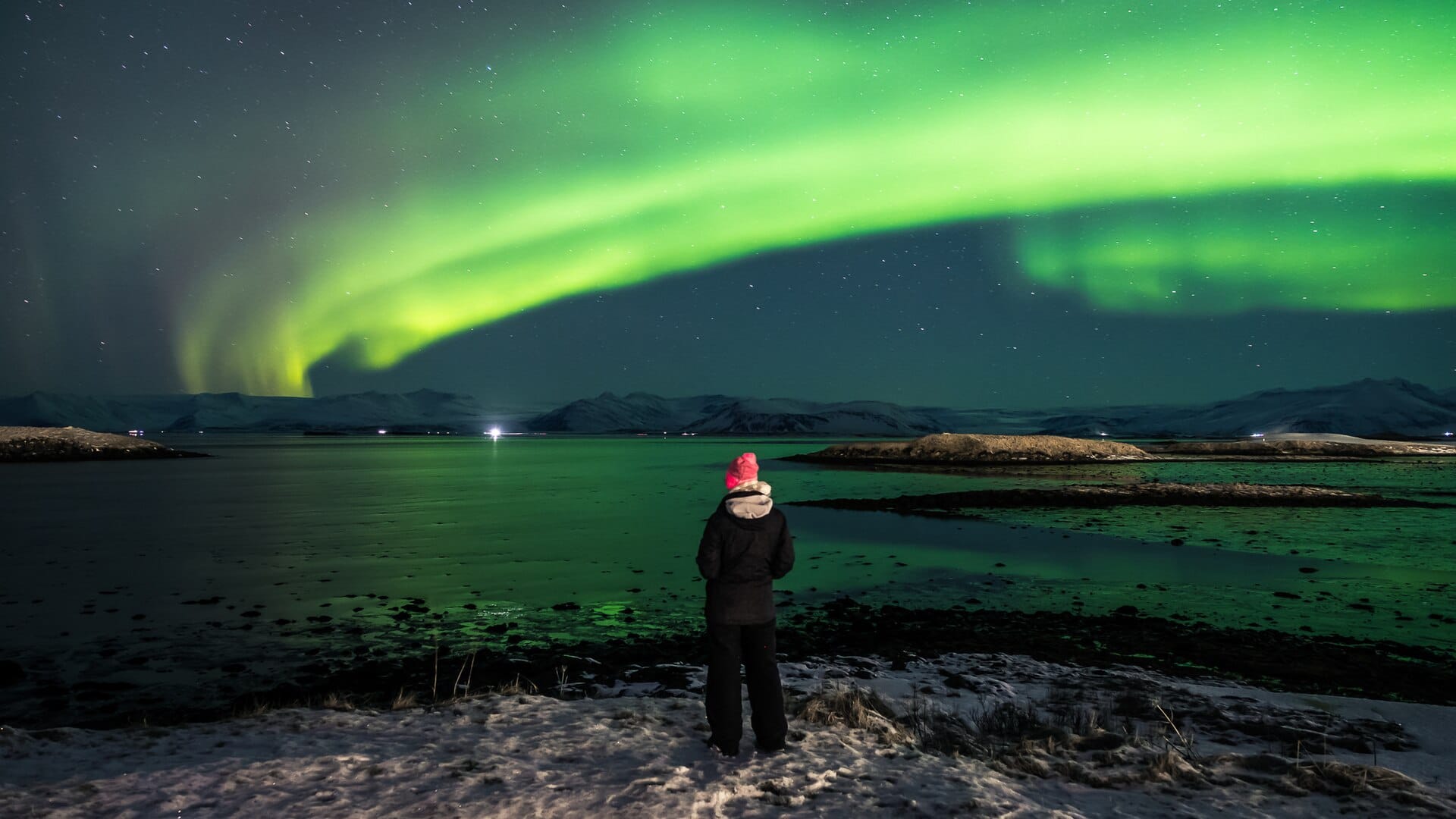
The sun is not the problem
The aurora follows the sun's roughly eleven-year cycle. The current cycle peaked in October 2024, stronger than the official forecast, and has been in its declining phase since 2026. That sounds like bad timing, but it is not: the 2026-27 season is expected to be better than any year between 2017 and 2023, just not as strong as 2024. Strong storms are normal in the declining phase, driven by fast solar wind streams that recur roughly every 27 days.
There is also a seasonal pattern worth knowing. Geomagnetic storms are close to twice as common around the equinoxes in March and September as around the solstices. In 95 years of planetary activity data, March has the highest average activity and December the lowest, even though December has the most darkness.
The sky is
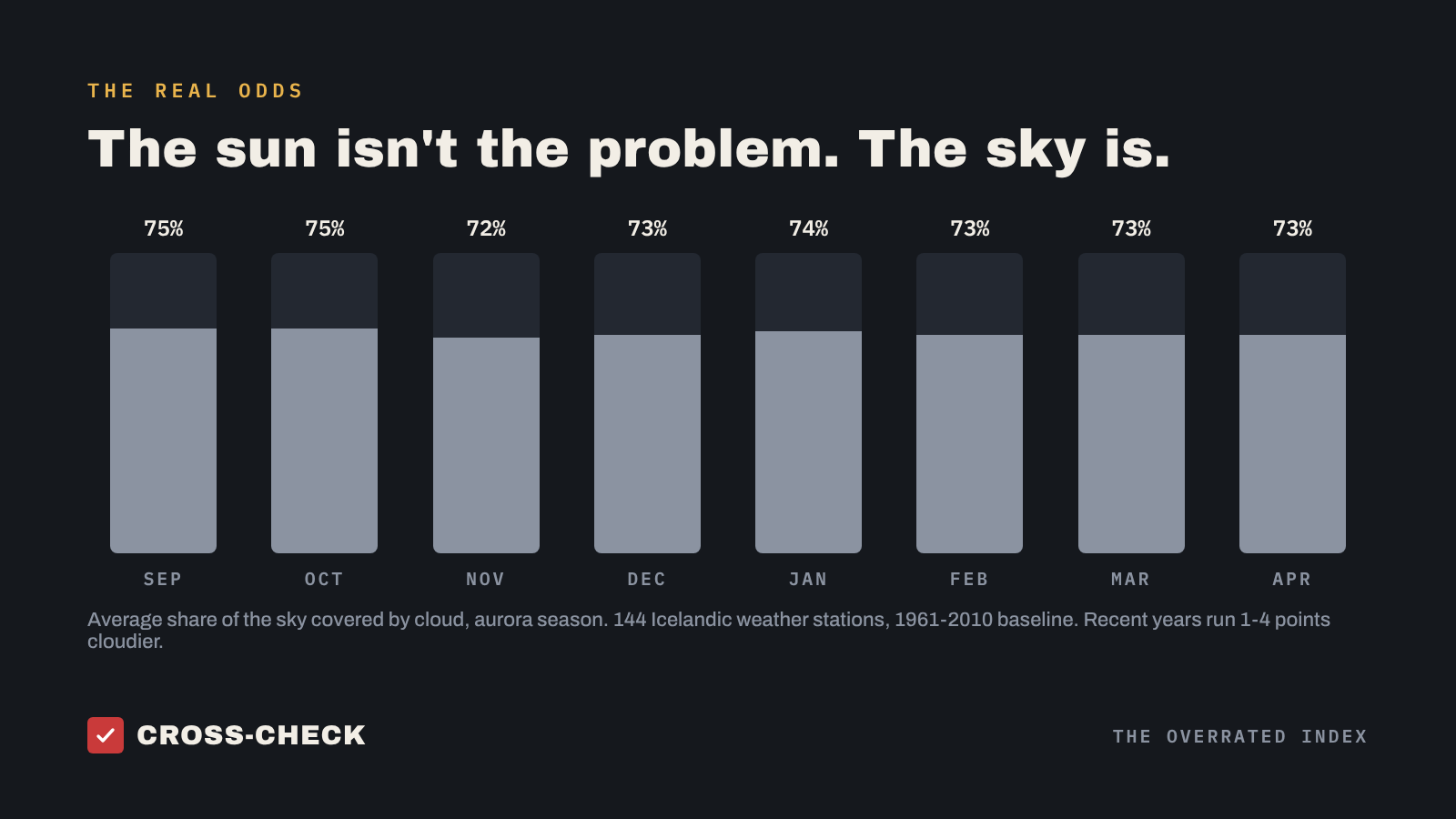
The aurora happens above the weather. You see it only if the weather lets you. And Iceland, an island in the North Atlantic, is cloudy. Across 144 weather stations, the average aurora-season month sees about three quarters of the sky covered, and recent years have run one to four points cloudier than that baseline.
The striking part is how little the month matters. The difference between the cloudiest and clearest month is about two percentage points. The difference between places is far bigger, about fifteen points between the clearest and cloudiest aurora regions. Where you stay in Iceland matters more than when you go.
Why the verdict is overrated
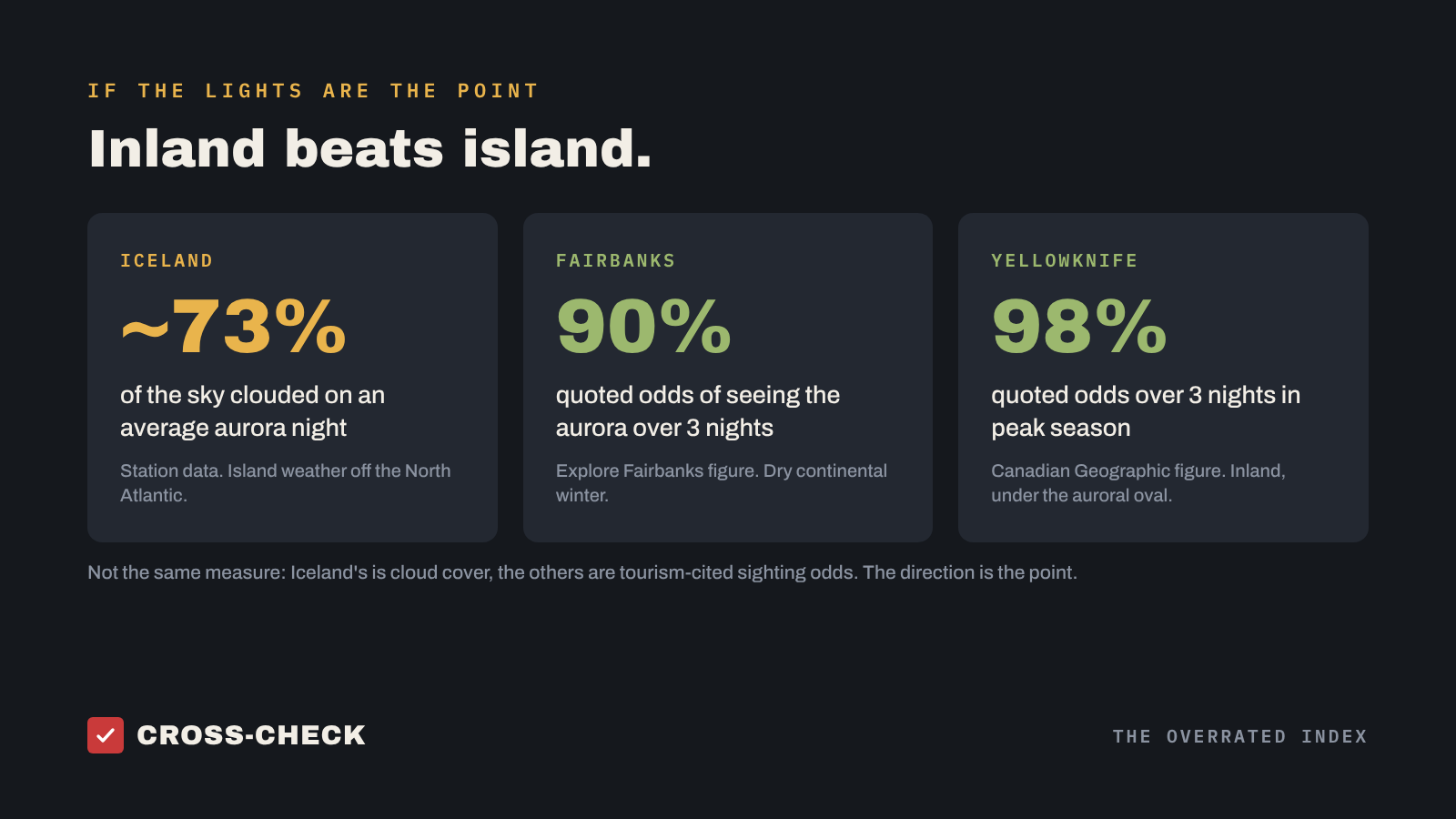
If seeing the aurora is the entire point of the trip, Iceland is not the best bet. The places that win on odds are inland and dry. Explore Fairbanks says three nights of active viewing in Interior Alaska gives better than 90 percent odds, and Canadian Geographic puts the chance at 98 percent over three nights in Yellowknife during peak season. Those are tourism-cited sighting odds, not the same measure as Iceland's cloud data, so treat the comparison as a direction rather than a scoreboard. But the direction is consistent: continental winters are clearer than island ones.
Iceland's own industry is honest about this in its fine print. Nobody can promise clear skies, so operators cancel on bad forecasts and the standard answer to a tour that runs under cloud is a free retry, not a refund.
The free retry is only half a promise
A basic coach tour from Reykjavik starts at about 10,000 Icelandic krona (BusTravel Iceland lists 9,990), and the big operators all offer a second chance if you see nothing. If the operator cancels for weather before departure, you get a refund or a rebooking. Reykjavik Excursions lets you rejoin for free as many times as needed, with the ticket valid for two years. BusTravel Iceland gives one free retry, valid for three years. Arctic Adventures offers repeat attempts for up to three years. None of them refund you if the tour runs and the sky stays shut.
A retry valid for two or three years sounds generous. It is worth something only if you are still in Iceland. Book the tour for your first or second night, so a failed attempt leaves you nights to use the retry. Book it for your last night and the guarantee is effectively worth nothing.
Why it still clears as a bonus
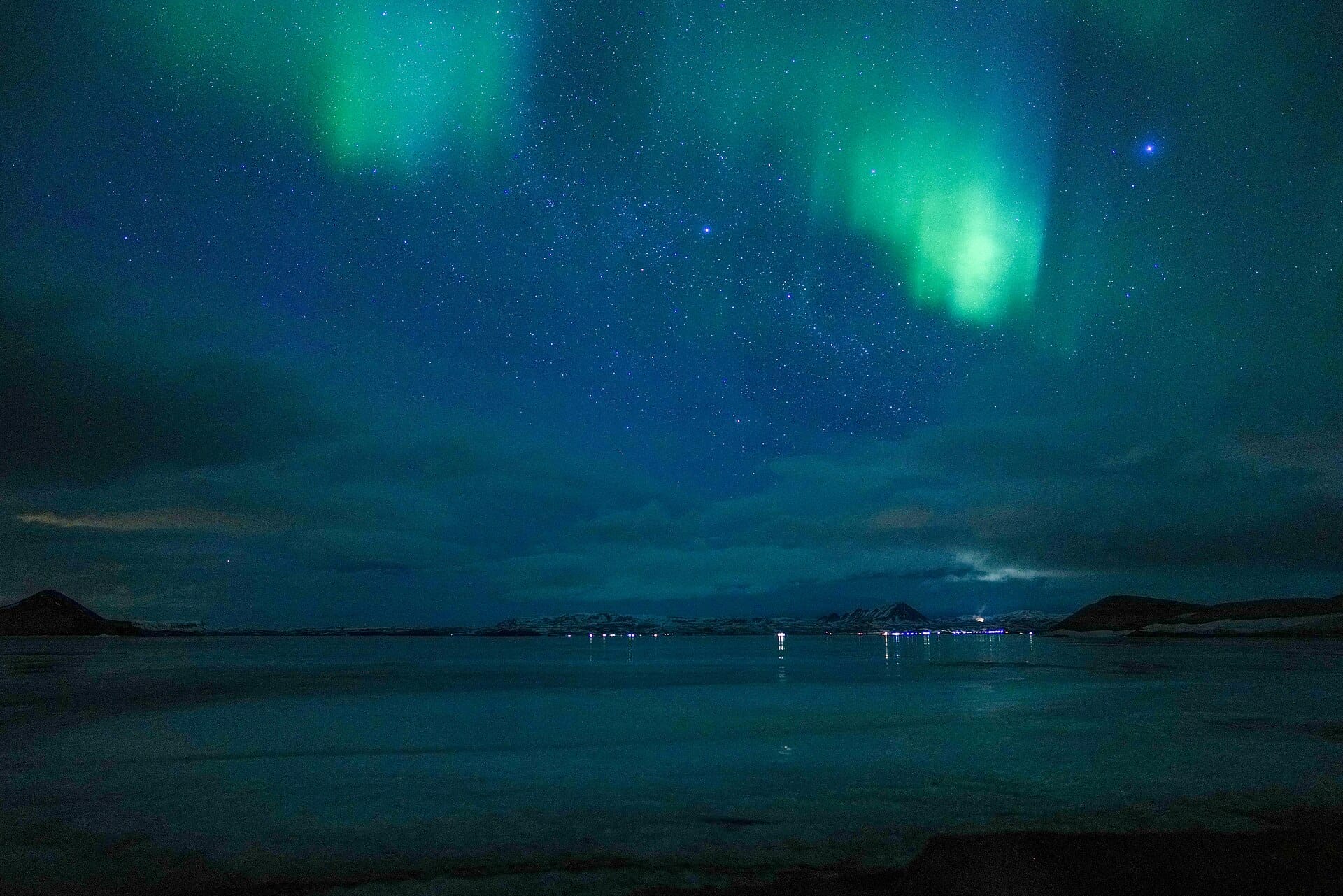
Fairbanks and Yellowknife have the odds. Iceland has everything else: waterfalls, glacier lagoons, hot springs and black-sand beaches you can see in daylight whether or not the sky cooperates at night. If the aurora is a hoped-for bonus on a trip you would enjoy anyway, the cloud risk stops mattering much. A cloudy week in Iceland is still a good week. A cloudy week on a trip booked only for the lights is a very expensive disappointment.
If you go for the lights anyway
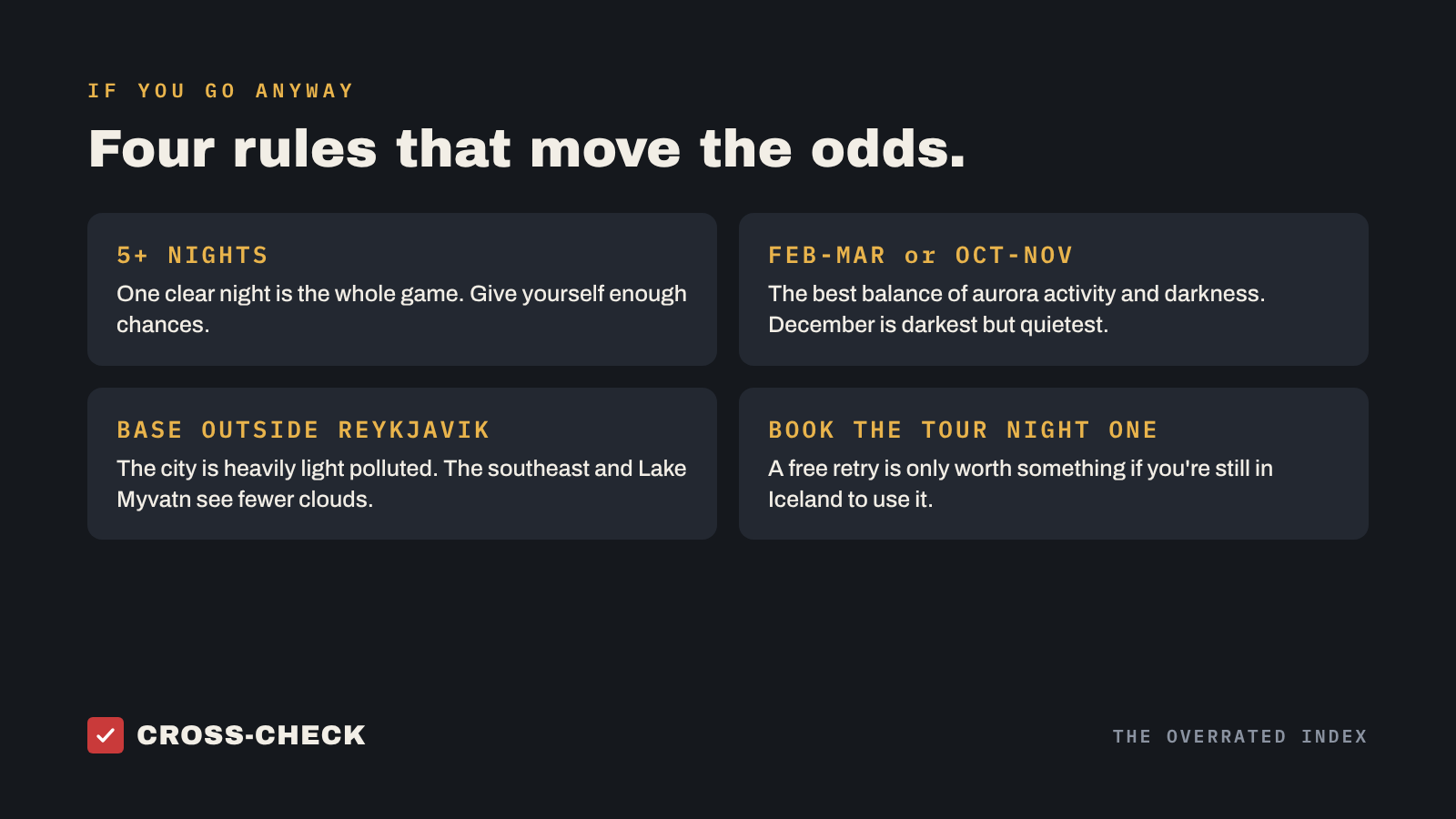
Stay five or more nights. With most of the sky clouded on an average night, the single biggest lever you control is the number of chances you give yourself.
Go February to March or October to November. These months balance strong activity with long enough nights. December has the most darkness but the lowest activity, and April's nights are getting short.
Base outside Reykjavik. The city is heavily light polluted, rated Bortle 7 to 8 against 2 to 3 for most of rural Iceland. On strong nights you can see the aurora from dark spots in town, and Thingvellir is the nearest properly dark sky, under an hour away. For cloud odds, the southeast between Kirkjubæjarklaustur and Djúpivogur is the clearest region on average, and Lake Mývatn is the strongest northern base.
Book the tour on night one, for the reason above.
Bottom line: if the northern lights are the whole reason for your trip, look at Fairbanks or Yellowknife first, because the inland skies are simply clearer. If you want Iceland and would love the aurora as a bonus, go, give yourself five nights or more, stay outside Reykjavik, and book any tour early in the trip. This verdict goes back on the board for a re-check as the solar cycle winds down.
Related checks: the Caribbean's cheap, low risk window, the Christmas market sweet spot, and booking Japan's cherry blossoms.
How we checked this
Verified October 2026 against: Guide to Iceland's analysis of 95 years of GFZ Potsdam Kp data and its companion study of 50,087 monthly cloud observations from 144 Icelandic weather stations, for monthly activity, darkness and cloud cover by month and region; Guide to Iceland's light pollution guidance for Reykjavik and Thingvellir; northernlights.travel's 2026-27 season summary of NOAA and NASA solar cycle data, for the October 2024 peak, the declining phase and the 27-day recurrence, and the Russell and McPherron (1973) equinox effect; Reykjavik Excursions, BusTravel Iceland and Arctic Adventures (via iceland.org) for tour pricing and retry terms; and Explore Fairbanks (as reported by Face the Outdoors) and Canadian Geographic (as reported by Dark Skies Atlas) for the Fairbanks and Yellowknife odds. Guide to Iceland is a travel company that sells tours, and the Fairbanks and Yellowknife figures come from tourism sources; we have flagged the sighting odds as quoted figures rather than independent measurements. We have not watched the aurora from any of these places ourselves.
No affiliate relationships. When that changes, you'll read it here first.