Two months ago we went through "Cancel For Any Reason" and found the reimbursement capped at 50 to 75 percent. Last month, credit card coverage and the requirement to put the whole trip on one card. This one is the clause that quietly outranks both, because it can void a medical claim before your trip exists.
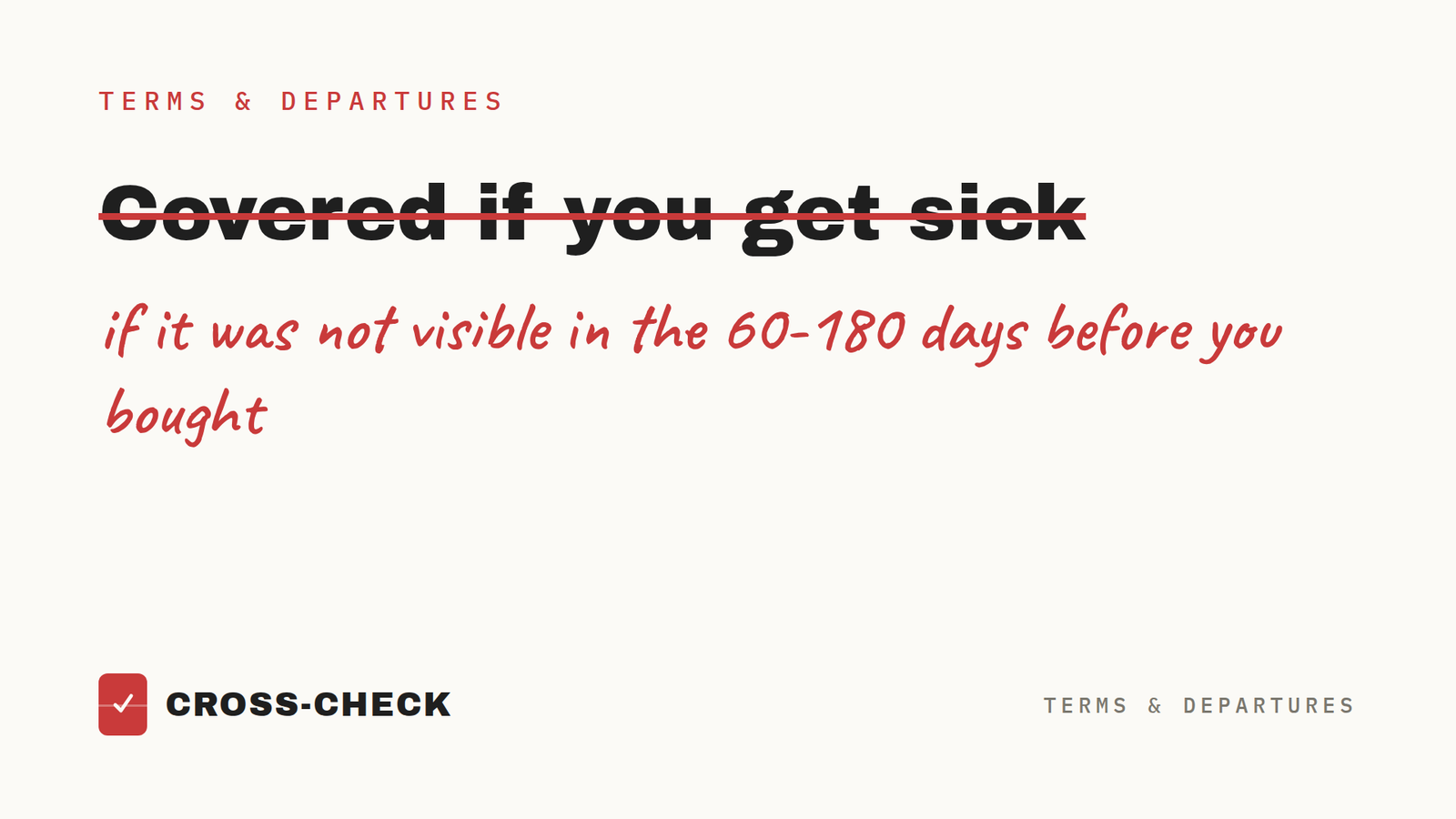
Trip cancellation for medical reasons is covered if you get sick if the reason you got sick was not visible in the 60 to 180 days before you bought
What the lookback period is
Every travel insurer defines a pre-existing condition using a window before your policy purchase date. Anything you were diagnosed with, treated for, prescribed medication for, or showed symptoms of during that window can be classified as pre-existing and excluded.
The window is commonly 60, 90, or 180 days, and it varies by plan. Some run longer. That range matters more than most buyers realise: a 180-day lookback reviews three times as much of your medical history as a 60-day one, and the shorter the window, the easier you are to cover.
Note the definition is broader than "conditions I am being treated for." Insurers generally include symptoms you noticed and did not get checked out, if a reasonable person would have. Undiagnosed does not mean invisible.
The part that surprises people
Stable chronic conditions are usually fine. Diabetes, high blood pressure, asthma: if there has been no change in diagnosis, symptoms, medication or treatment during the lookback window, most plans do not treat these as pre-existing. Routine, unchanged, controlled is the standard.
The trigger is change. A dosage adjustment, a new referral, a test ordered, a symptom investigated. That is what turns a managed condition into an excluded one, and it is why the clause catches people who genuinely believed they were healthy.
The waiver, and why the clock is the whole game
Most reputable insurers offer a pre-existing condition exclusion waiver, which removes the exclusion entirely. It is generally free, in the sense that it does not carry its own line-item charge, though plans offering it tend to cost more overall because they also carry stronger medical benefits.
You do not get it by asking. You get it by meeting the eligibility conditions, and they are structural. Buy inside the window, typically within 14 to 21 days of your initial trip payment depending on the insurer. Insure the full nonrefundable trip cost, not just the flight. And be medically stable at purchase, which means no changes during the lookback, not that you are in perfect health.
If those look familiar, they should. They are close to the same conditions that gate the Cancel For Any Reason upgrade, and for the same reason: the insurer is buying certainty about what you knew when you paid.
What this means in practice
The decision about whether your medical claim gets paid is made in the week you book, not the week you get sick. Insurance bought two months after your deposit is a different product from the same policy bought two days after, even at the same price, from the same company.
So the sequence is: pay the deposit, then buy the policy in the same sitting, then confirm in writing that the waiver is attached. Ask the insurer to state the lookback length for your specific plan, because 60 to 180 days is a market range, not your number.
Bottom line: the cheapest way to improve your travel insurance is not to spend more. It is to buy it sooner.
How we checked this
Verified September 2026 against: Squaremouth's pre-existing condition resources for lookback ranges, waiver eligibility and the stability standard; InsureMyTrip's coverage documentation on the 60, 90 and 180 day windows and the treatment of undiagnosed symptoms; Forbes Advisor on waiver of lookback mechanics; Experian and Insurance Business on stable chronic conditions; and American Visitor Insurance for per-plan examples including 20 and 21 day purchase windows and specific 60-day lookback plans. Windows and definitions vary by plan and change between policy versions; your certificate of insurance is the only document that governs your coverage.
No affiliate relationships. When that changes, you'll read it here first.