Airline credit cards are sold on the welcome bonus: tens of thousands of miles, a free flight's worth, for signing up. The bonus is a one-time event. The annual fee is every year. So is an airline credit card worth it once the bonus is spent?
For most people the honest answer comes down to one benefit and one number: the free checked bag, and how many times a year you would otherwise pay for it. This year that math got easier to win, because bag fees went up.
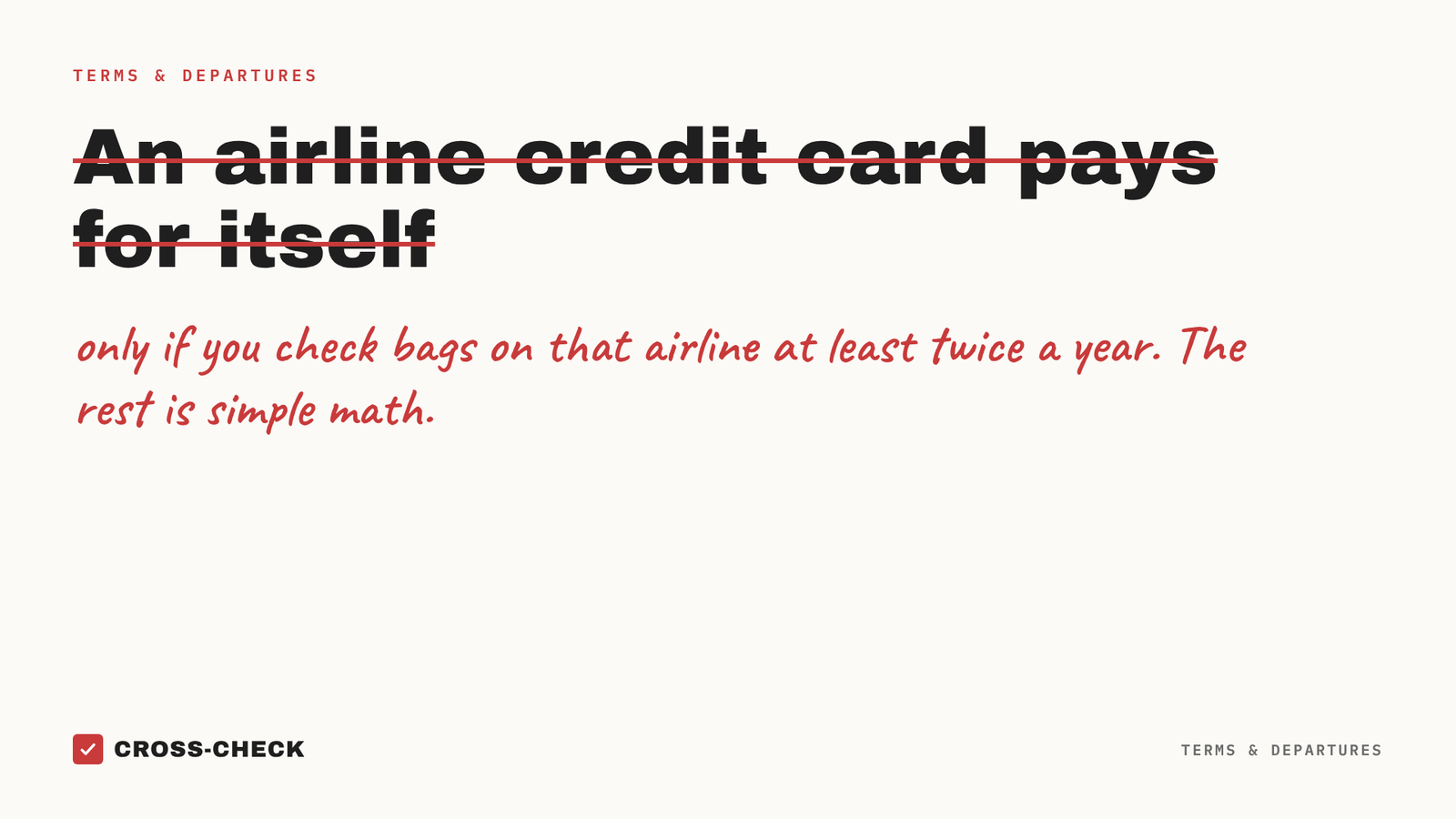
The pitch says an airline credit card pays for itself only if you check bags on that airline at least twice a year

The bag fee is the whole case
In April 2026, Delta, United and Southwest raised the first checked bag on domestic economy fares to $45 each way, and $55 for the second. American charges $45 online and $50 at the airport. JetBlue moved to about $39 off-peak and $49 at peak times. A year ago the first bag was $35 on most of these airlines.
Most mainstream airline cards waive that first bag. That is the benefit you can count on using, so it is the right one to do the math with. Priority boarding, inflight discounts and award discounts are real, but they are worth very different amounts to different people. If the bag math does not work, the extras rarely rescue it.
Is an airline credit card worth it? Do the math
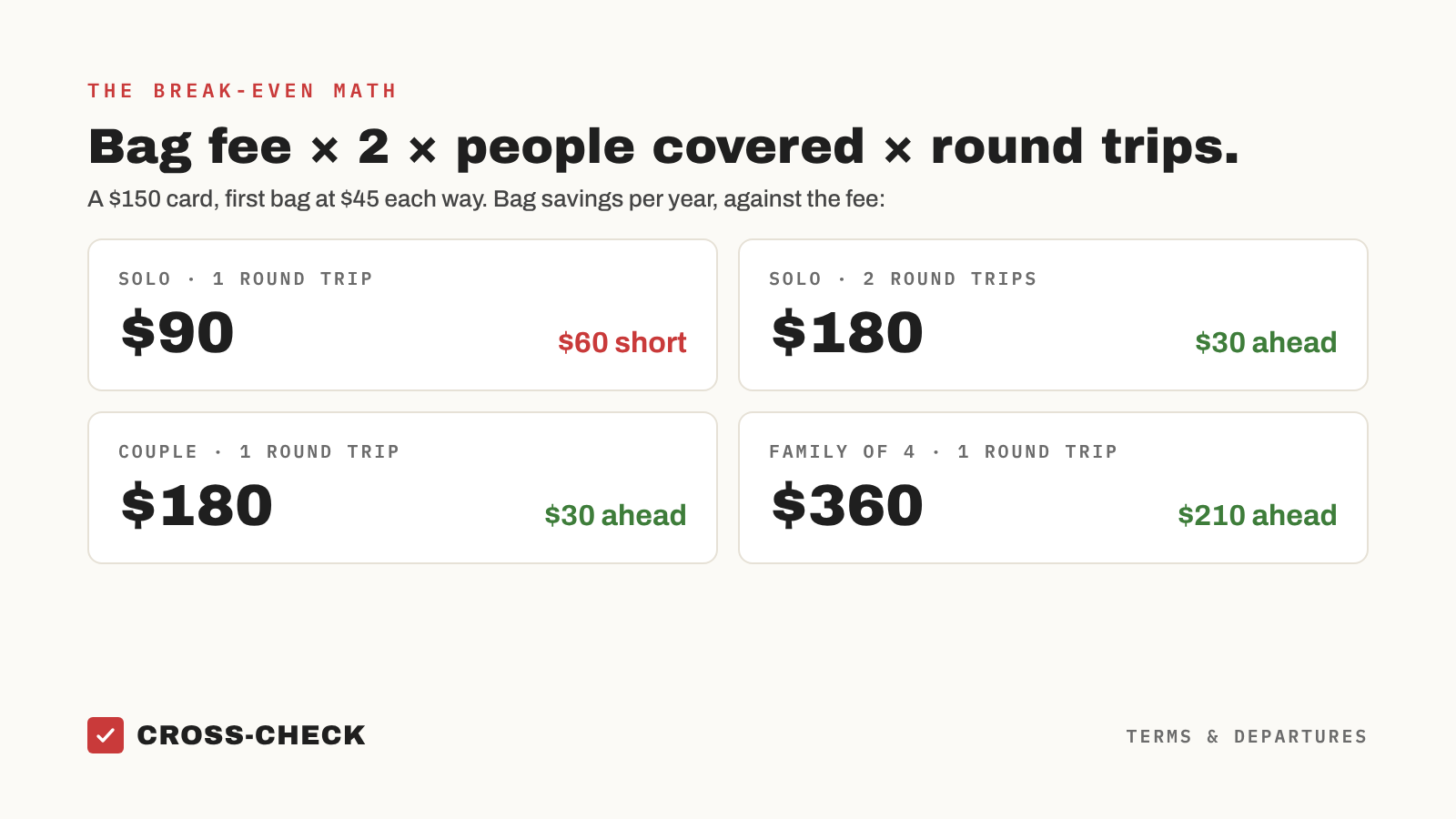
The formula is simple: the bag fee each way, times two, times the number of people the card covers, times your round trips a year. Compare that with the annual fee.
Take a card with a $150 fee and a $45 bag. Fly alone once a year and you save $90, which leaves you $60 behind. Fly alone twice and you save $180, which puts you $30 ahead. One round trip as a couple also comes to $180. A family of four checking a bag each saves $360 on a single trip, if the card covers all four. That last condition is where the cards differ most.
Who rides free depends on the card
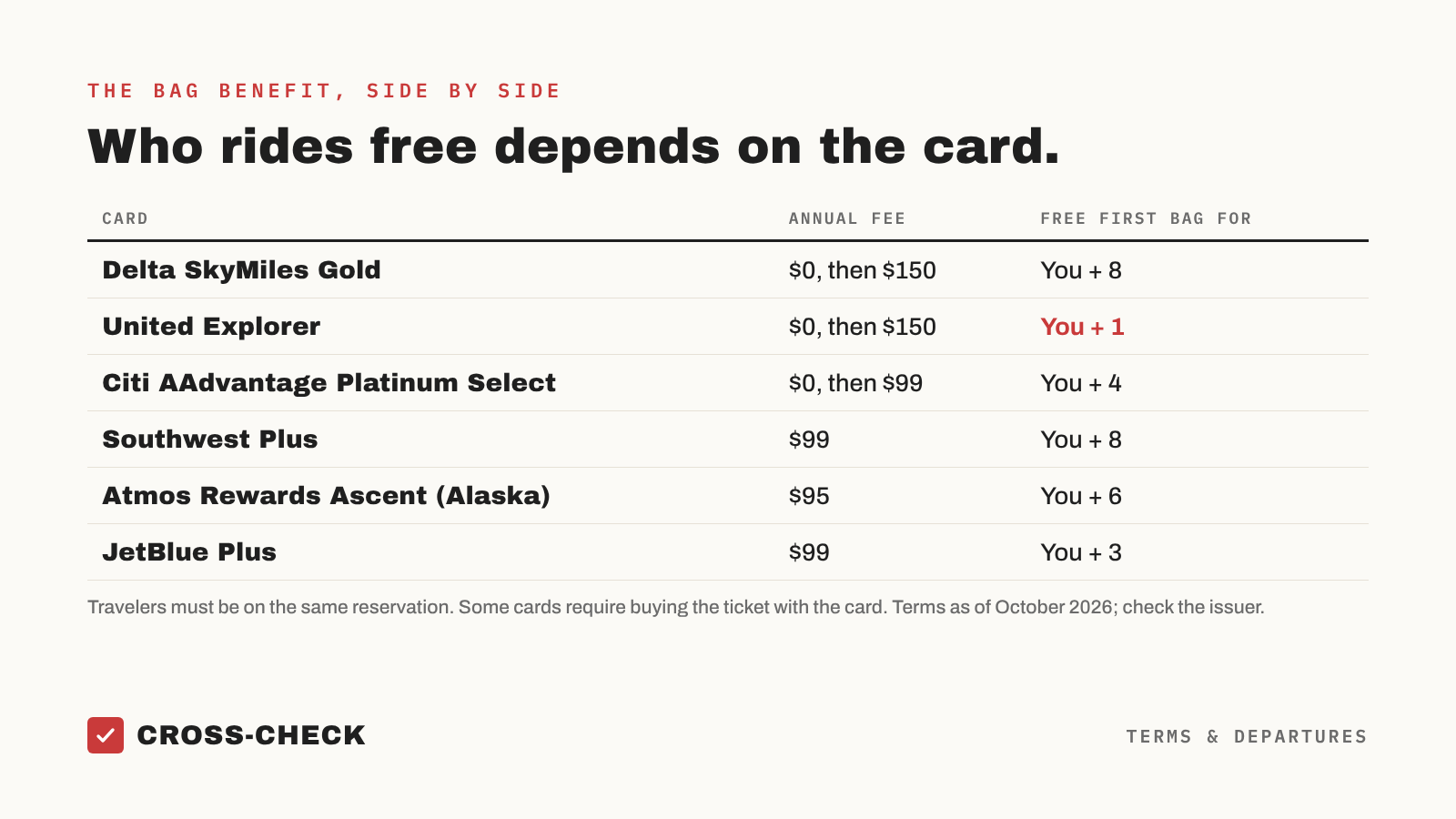
Delta's SkyMiles Gold card and Southwest's cards cover you plus up to eight people on the same reservation. The Citi AAdvantage Platinum Select covers you plus four on domestic American itineraries. Alaska's Atmos Rewards Ascent covers you plus six. JetBlue Plus covers you plus three on JetBlue-operated flights.
United Explorer is the outlier: it covers the cardholder and one companion. For a family of four, two people still pay. That does not make it a bad card for a couple, but it changes the family math by half.
The fine print also differs on how you book. Alaska and JetBlue require the ticket to be bought with the card, and United has purchase conditions of its own. Southwest ties the benefit to the cardholder's Rapid Rewards number on the reservation. In every case, everyone has to be on the same booking. Check the current terms with the issuer before you count on it, because these change.
What the fee doesn't tell you
Three costs sit outside the bag math.
Interest. Card interest rates are high enough that carrying a balance for a few months wipes out a year of bag savings. An airline card only makes sense if you pay in full.
The everyday earning rate. Most airline cards earn extra on that airline's tickets and little on everything else. If you put your groceries and bills on an airline card instead of a plain cash back card, you may be giving up more than the bags save. Keep the airline card for the perks and the airline's own purchases.
Loyalty you didn't mean to buy. A bag benefit on one airline quietly nudges you toward that airline even when another is cheaper. If you usually book whatever fare is lowest, the card is worth less to you than the math suggests.
Who should get one, and who shouldn't
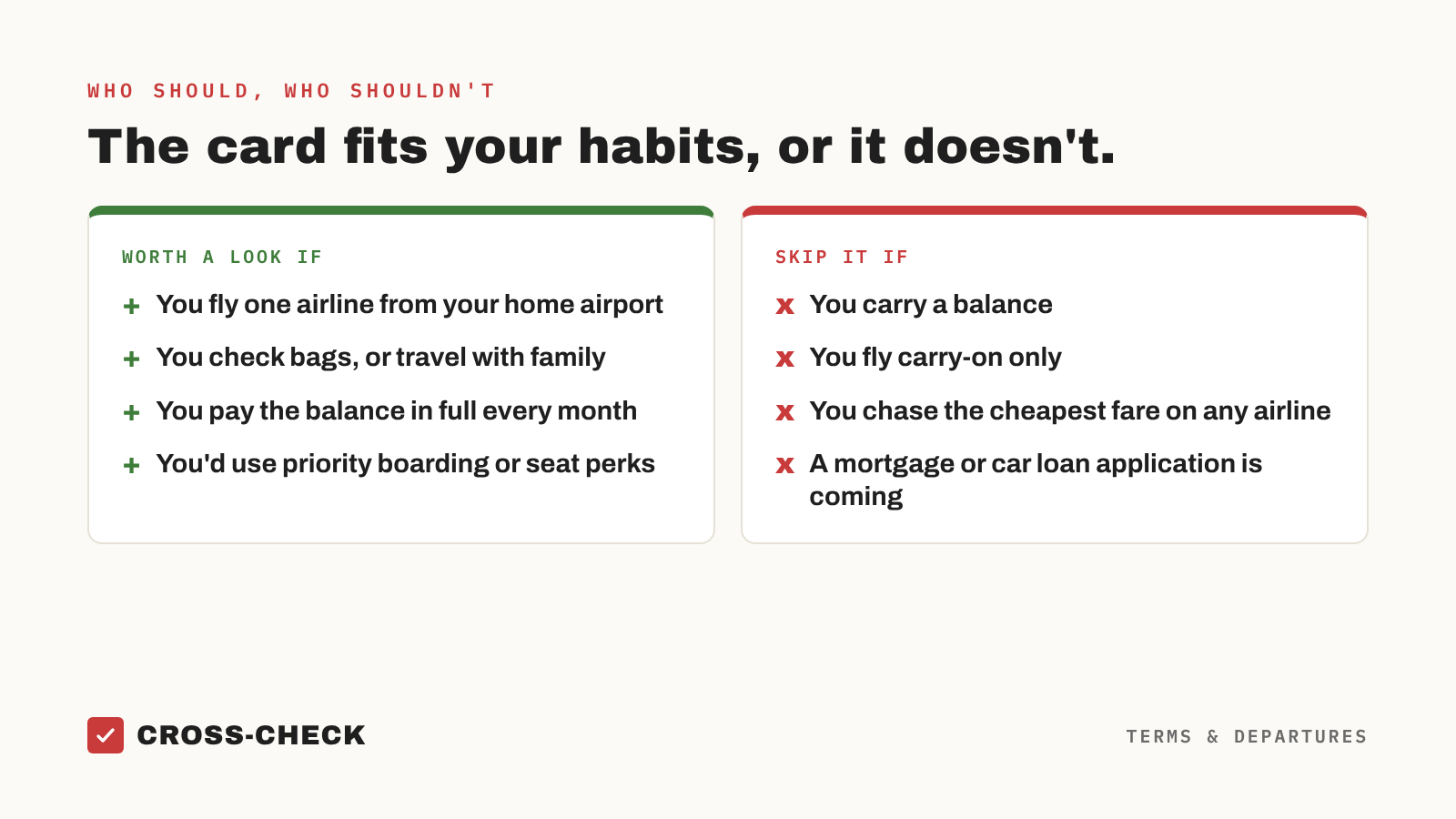
Worth a look if one airline dominates your home airport, you check bags or travel with family, and you pay the balance in full every month. Several of these cards waive the fee in the first year, which gives you a year to test whether you actually use the benefit.
Skip it if you carry a balance, if you travel carry-on only, if you book whichever airline is cheapest, or if you are about to apply for a mortgage or car loan, since a new credit application can affect the terms you are offered. And skip it if the only reason is the welcome bonus. Southwest's cards are a clear example: from January, their bonuses stop counting toward the Companion Pass.
We are not financial advisers, and whether a card makes sense depends on your own credit and spending. What we can tell you is how to check the math before an issuer does it for you.
Bottom line: an airline credit card is worth it if you check bags on one airline at least twice a year, or once with a companion the card covers, and you pay in full. Count the people the card actually covers, not the people you travel with. If the bags do not cover the fee, the extras usually will not either.
Related checks: the rule that voids card travel insurance, what basic economy costs you now, and how to avoid seat fees.
How we checked this
Verified October 2026 against: Newsweek's April 2026 summary of the Delta, United, Southwest and JetBlue bag fee increases; NerdWallet's October 2026 analysis of airline card value after the increases, including airport surcharges; Card Savvy's April 2026 comparison of card annual fees, first-year waivers and companion limits, updated September 2026; and Platinum Flyer's July 2026 review of each issuer's bag benefit terms, companion limits and purchase conditions. Card terms and fees change often; the issuer's terms at the time you apply govern.
No affiliate relationships. When that changes, you'll read it here first.